Scientific Technology
G-32, Block-G, Sector-3, Noida, Uttar Pradesh, 201301, INDIA
Portable LIBS Spectrometer: Everything You Need to Know
A portable LIBS spectrometer is a compact, handheld analytical instrument that uses laser-induced breakdown spectroscopy to identify the elemental composition of materials — instantly, without any sample preparation. Whether you're a geologist in the field, a quality control engineer on the factory floor, or an archaeologist at an excavation site, this technology brings laboratory-grade analysis directly to your fingertips.
That's the short answer. But the full story is even more fascinating. From mining exploration to environmental monitoring, portable LIBS spectrometers are reshaping how scientists, researchers, and industry professionals analyze materials in real time. This guide covers everything you need to know — how the technology works, who benefits from it, and what makes the Portable LIBS Spectrometer LIS-02 stand out.
What Is a Portable LIBS Spectrometer?
LIBS stands for Laser-Induced Breakdown Spectroscopy. It's a type of atomic emission spectroscopy that works by focusing a high-energy laser pulse onto a material's surface. The laser instantly vaporizes a tiny amount of the material, creating a small plasma — essentially a superheated cloud of atoms. As this plasma cools, the excited atoms emit light at specific wavelengths. Those wavelengths act like a fingerprint, revealing exactly which elements are present and in what quantities.
What makes this impressive is the speed. The entire process — from laser pulse to elemental reading — happens in milliseconds. And because a portable LIBS spectrometer packs all of this technology into a handheld or field-deployable device, you no longer need to collect samples, ship them to a lab, and wait days for results.
How Is LIBS Different from Other Spectrometers?
Traditional spectrometers like XRF (X-ray fluorescence) and ICP-OES (inductively coupled plasma optical emission spectrometry) are well-established tools. But LIBS has some notable advantages:
- No sample preparation required. LIBS can analyze solids, liquids, and even gases directly.
- Multi-element detection. A single laser shot can reveal the presence of dozens of elements simultaneously.
- Standoff capability. Some LIBS systems can analyze materials from a safe distance without contact.
- Lightweight and portable. Modern portable LIBS spectrometers weigh just a few kilograms.
Of course, trade-offs exist. LIBS can be slightly less sensitive than ICP-OES for trace-level detection, but for most field applications, the speed and portability more than compensate.
How Does a Portable LIBS Spectrometer Work?
Let's break down the process step by step, because understanding the mechanics helps you appreciate what makes this tool so powerful.
- Laser firing. A pulsed laser (typically Nd:YAG) fires at the sample surface. The energy density is enormous — enough to ablate just a few micrograms of material.
- Plasma formation. The ablated material forms a plasma plume that reaches temperatures of tens of thousands of Kelvin.
- Light emission. As the plasma cools (in microseconds), excited atoms and ions release energy as photons at element-specific wavelengths.
- Spectral collection. A spectrometer collects and disperses this light, recording the emission spectrum.
- Data analysis. Onboard software compares the spectrum against a reference library to identify elements and concentrations.
The whole sequence happens in under a second, often faster. That's what makes portable LIBS spectrometers so compelling for time-sensitive or high-throughput applications.
Key Applications of Portable LIBS Spectrometers
Geological Exploration and Mining
Geologists were among the first to embrace portable LIBS technology. When you're surveying a remote ore deposit, you can't easily haul tons of rock samples back to a laboratory. A portable LIBS spectrometer lets field teams test samples on-site, identifying promising mineral zones without delay. This accelerates decision-making and reduces exploration costs significantly.
Metals and Alloy Verification
In manufacturing and quality control, verifying the composition of metals and alloys is critical. A misidentified alloy in an aerospace component, for example, can have serious consequences. Portable LIBS spectrometers allow technicians to perform positive material identification (PMI) quickly, checking incoming materials or finished parts right on the production floor.
Environmental Monitoring
Contaminated soil and water analysis traditionally involve lengthy lab processes. LIBS enables rapid screening of heavy metals — lead, arsenic, mercury — directly at contamination sites. This is invaluable for emergency response teams and environmental consultants who need fast results to guide remediation efforts.
Art, Archaeology, and Cultural Heritage
Museums and conservation teams use portable LIBS spectrometers to study pigments in paintings, analyze ancient metalwork, or examine the composition of ceramics — all without damaging irreplaceable artifacts. The minimal sample destruction (only micrograms are ablated) makes LIBS ideal for this delicate work.
Pharmaceutical and Food Safety
Elemental analysis is increasingly important in pharmaceutical quality control and food contamination testing. Portable LIBS systems support rapid screening workflows in production environments where speed is essential.
Introducing the Portable LIBS Spectrometer LIS-02
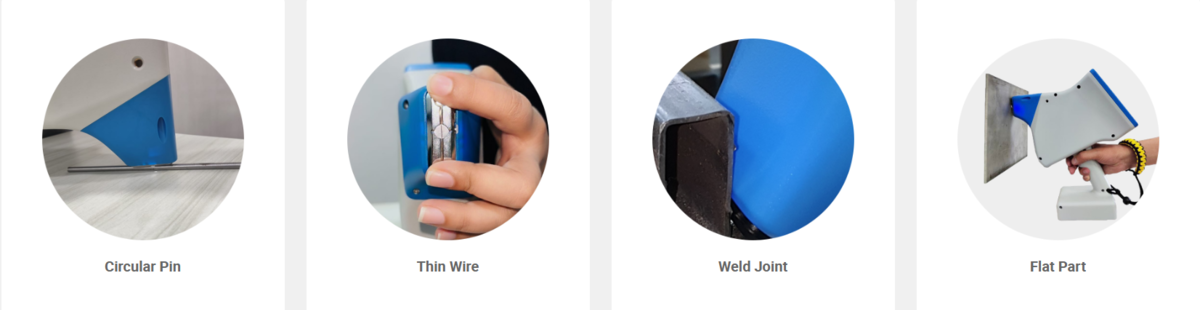
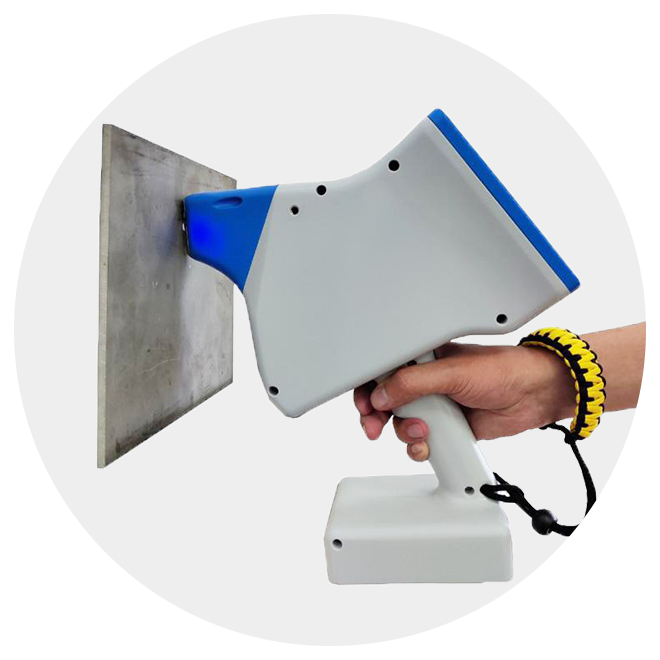
Among the growing range of portable LIBS instruments available today, the Portable LIBS Spectrometer LIS-02 represents a highly capable option designed for demanding field and laboratory environments. It combines analytical precision with rugged portability, making it suitable for a wide range of industrial and scientific applications.
Key Features of the LIS-02
- Compact and lightweight design for easy transport into field environments
- Multi-element simultaneous detection across a broad spectral range
- Onboard database and analysis software for immediate results interpretation
- Minimal sample preparation — point, shoot, and read
- Robust construction suited for challenging outdoor or industrial conditions
- Rechargeable battery operation for extended fieldwork
The LIS-02 is particularly well regarded in geological surveys, metal identification, and environmental screening contexts. Its intuitive interface means even operators without a deep spectroscopy background can quickly learn to use it effectively.
Advantages and Limitations to Consider
Advantages
- Speed: Results in seconds rather than hours or days
- Portability: Take the analysis to the sample, not the other way around
- Versatility: Works on a wide range of materials and sample types
- Non-destructive (nearly): Only microscopic amounts of material are consumed
- Cost-effective over time: Eliminates many outsourced lab costs
Limitations
- Detection limits: LIBS is less sensitive than laboratory ICP-OES for very low trace concentrations
- Matrix effects: Complex materials can complicate quantitative accuracy
- Surface condition sensitivity: Dirty or oxidized surfaces may require a few cleaning shots before accurate readings
- Laser safety: As with all laser instruments, proper training and safety protocols are essential
Understanding these trade-offs helps you deploy portable LIBS technology where it delivers the greatest value.
How to Choose the Right Portable LIBS Spectrometer
When evaluating portable LIBS spectrometers, keep these factors in mind:
- Application focus: Geological, industrial, environmental, or archival? Different models are optimized for different use cases.
- Spectral range: A wider wavelength range enables detection of more elements, including lighter ones like carbon, nitrogen, and hydrogen.
- Software capability: Look for instruments with regularly updated element libraries and user-friendly data management tools.
- Durability ratings: If you're working outdoors, check IP ratings for dust and moisture resistance.
- Battery life: For extended field work, longer battery life or hot-swap capability matters.
- Support and calibration services: Ongoing manufacturer support ensures your instrument stays accurate over time.
The Portable LIBS Spectrometer LIS-02 addresses most of these criteria, making it a strong contender for users who need reliable multi-element analysis in the field.
FAQ: Portable LIBS Spectrometer
Q1: What does LIBS stand for in a portable LIBS spectrometer?LIBS stands for Laser-Induced Breakdown Spectroscopy. It's an analytical technique that uses a focused laser pulse to vaporize a tiny amount of material, generating plasma whose light emission reveals the elemental composition of the sample.
Q2: Can a portable LIBS spectrometer analyze all elements on the periodic table?Modern portable LIBS spectrometers can detect a very broad range of elements, including metals, metalloids, and even light elements like carbon, lithium, and beryllium — something that XRF instruments struggle with. However, detection sensitivity varies, and very low concentrations of certain elements may require specialized configurations.
Q3: Is a portable LIBS spectrometer safe to use?Yes, when used with proper training and adherence to laser safety protocols. The laser in a LIBS instrument is Class 3B or 4, which means eye protection and safe operating procedures are mandatory. Reputable instruments like the LIS-02 include built-in safety features to minimize risk.
Q4: How accurate is a portable LIBS spectrometer compared to laboratory instruments?For most field screening applications, portable LIBS spectrometers deliver excellent qualitative and semi-quantitative accuracy. For highly precise quantitative measurements, a laboratory-grade ICP-OES may still be preferred. However, the gap in accuracy has narrowed significantly with modern LIBS instruments.
Q5: What industries benefit most from portable LIBS spectrometers?The technology sees wide adoption in mining and geological exploration, metals manufacturing, environmental science, archaeology, pharmaceutical quality control, and recycling industries. Any sector where rapid, on-site elemental analysis improves efficiency or safety stands to benefit.
Q6: How long does it take to get a reading from a portable LIBS spectrometer?Most portable LIBS spectrometers, including the LIS-02, deliver results within one to three seconds per measurement. In practice, multiple shots are often averaged for improved accuracy, so a full analysis typically takes under a minute.
Conclusion
Portable LIBS spectrometers have fundamentally changed what's possible in field and industrial analysis. By bringing fast, accurate, and multi-element spectroscopy out of the laboratory and into the real world, they save time, reduce costs, and open new possibilities across industries from mining to conservation.
The Portable LIBS Spectrometer LIS-02 exemplifies what modern portable LIBS technology can achieve — compact, powerful, and built for practical use. Whether you're screening metal alloys on a production line, analyzing soil at an environmental remediation site, or exploring mineral deposits in a remote location, a portable LIBS spectrometer gives you the analytical capability you need, right where you need it.
Understanding the science behind LIBS and choosing the right instrument for your application is the first step toward integrating this remarkable technology into your workflow.