
Introduction: Real-Time Elemental Analysis, Right Where You Need It
A portable LIBS spectrometer gives scientists, engineers, and analysts the ability to identify and measure elemental composition of materials directly on-site — no laboratory required. If you've ever needed fast, accurate elemental analysis without shipping samples off to a lab and waiting days for results, this technology is exactly what changes that workflow.
LIBS stands for Laser-Induced Breakdown Spectroscopy. It's a powerful analytical technique that uses a focused laser pulse to create a tiny plasma on the surface of a material. That plasma emits light, and the spectrometer reads that light to tell you precisely which elements are present and in what concentrations.
What makes the portable LIBS spectrometer so significant is not just the science — it's the accessibility. Analyses that once required bulky lab equipment and trained chemists can now happen in minutes, in the field, with a handheld or compact device.
What Is a Portable LIBS Spectrometer?
The Basic Science Behind LIBS
Laser-Induced Breakdown Spectroscopy works by focusing a high-energy laser pulse onto a sample surface. The laser vaporizes a tiny amount of material, forming a hot plasma. As that plasma cools, the excited atoms and ions emit light at wavelengths specific to each element.
A detector captures this emission spectrum, and software interprets the peaks to identify which elements are present. The entire process — from laser pulse to result — takes just milliseconds.
This approach works on virtually any material: metals, alloys, minerals, soils, ceramics, glass, polymers, and more. You don't need to prepare the sample extensively, and in many cases, the analysis is essentially non-destructive.
What Makes It "Portable"?
Traditional LIBS setups filled laboratory benches. Miniaturization of diode-pumped solid-state lasers, compact spectrometer optics, and powerful onboard processors have made it possible to shrink the system down to something a technician can carry to a job site.
Modern portable LIBS spectrometers integrate the laser source, focusing optics, collection fiber, spectrometer, and computing unit into a single handheld or benchtop-portable package. Battery operation and wireless data transfer make them fully field-deployable.
Introducing the Portable LIBS Spectrometer LIS-02
The Portable LIBS Spectrometer LIS-02 is a purpose-built instrument designed for professional elemental analysis outside the lab. It represents the practical application of LIBS technology in a form factor that works for real-world conditions.
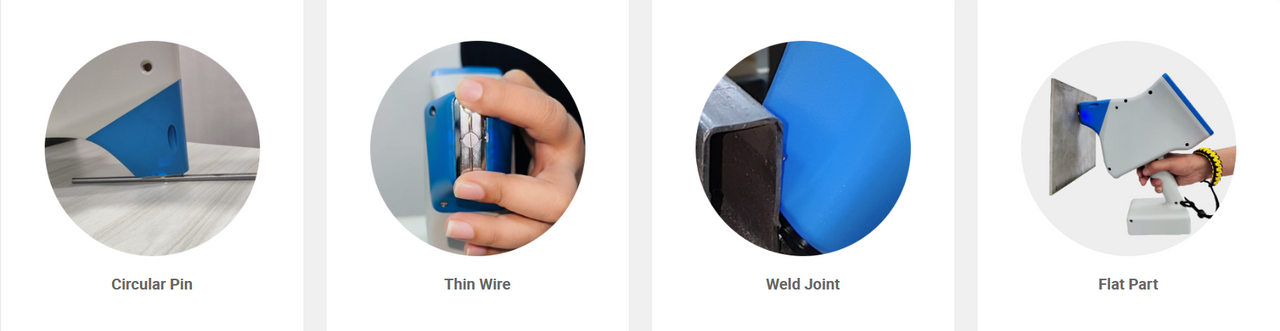
Key Capabilities of the LIS-02
The LIS-02 is engineered to handle demanding analytical tasks with precision. Some of its standout capabilities include:
- Broad elemental coverage — capable of detecting elements across a wide range of the periodic table, from light elements like lithium and carbon to heavy metals
- Fast acquisition time — results delivered in seconds, enabling rapid screening and sorting workflows
- High spectral resolution — fine spectral discrimination means you can distinguish closely spaced elemental emission lines, improving accuracy in complex matrices
- Rugged, field-ready build — designed to operate in dusty, humid, or variable-temperature environments without compromising measurement integrity
- Intuitive software interface — onboard analysis software with calibration libraries allows operators to work efficiently without deep spectroscopy expertise
Who Uses the LIS-02?
The LIS-02 serves a diverse range of professionals:
- Geologists and mining engineers who need real-time ore grade data during exploration or extraction
- Metallurgists and quality control teams performing alloy verification and metal sorting
- Environmental scientists monitoring soil or sediment contamination in the field
- Industrial inspectors checking material composition for compliance and safety
- Researchers who need a flexible, portable platform for elemental analysis across varied sample types
Why Portable LIBS Spectrometers Are Changing Elemental Analysis
Speed That Traditional Methods Can't Match
Conventional techniques like ICP-OES, XRF, or wet chemistry deliver accurate results — but they come with delays. Sample preparation, transportation, lab queues, and reporting cycles can stretch analysis time to days or weeks.
A portable LIBS spectrometer collapses that timeline dramatically. On-site measurements mean decisions can be made in real time. For industries like mining or scrap metal recycling, where material flow decisions need to happen quickly, this speed translates directly into cost savings.
Minimal Sample Preparation
One of the most underrated advantages of LIBS is the minimal sample prep required. For many materials, a quick surface wipe is sufficient before measurement. Compare that to acid digestion or fusion preparation needed for ICP analysis, and the productivity difference becomes clear.
That said, for the most accurate quantitative results — especially in alloy analysis — light surface polishing or cleaning is recommended to remove oxidation layers or contamination.
Non-Contact and Micro-Destructive Testing
Because the laser only ablates a tiny amount of material (often just a few micrograms), LIBS is considered micro-destructive at worst. For high-value components, precious materials, or archived samples, this is a meaningful advantage over techniques that require larger sample volumes.
Cost Efficiency Over Time
While the upfront cost of a portable LIBS spectrometer like the LIS-02 is a real investment, the elimination of per-sample lab fees, shipping costs, and turnaround delays makes the economics compelling — especially for high-volume users.
Common Applications of Portable LIBS Spectrometers
Mining and Geochemical Exploration
Field geologists use portable LIBS spectrometers to analyze drill core, outcrop samples, and mineral specimens directly at the site. The ability to get immediate lithium, copper, or rare earth element readings helps teams make faster decisions about where to focus drilling efforts.
Scrap Metal Identification and Sorting
Metal recyclers deal with mixed scrap streams where alloy identification is critical. Misidentifying a steel grade or aluminum alloy can create costly problems downstream. Portable LIBS instruments allow rapid, accurate sorting at the yard without laboratory delays.
Soil and Environmental Monitoring
Detecting heavy metal contamination in soils — lead, arsenic, cadmium — traditionally required collecting samples and sending them to accredited labs. Portable LIBS spectrometers accelerate this process, enabling site assessments and contamination mapping in a single field visit.
Quality Control in Manufacturing
Incoming material verification is a constant challenge in manufacturing. A portable LIBS spectrometer at the receiving dock allows inspectors to verify alloy grades and elemental composition before materials enter the production line, catching substitution errors early.
Cultural Heritage and Art Conservation
Conservation scientists use LIBS to analyze pigments, metal artifacts, and glass objects without causing visible damage. The technique's precision and minimal invasiveness make it well-suited for examining irreplaceable objects.
Tips for Getting the Best Results from Portable LIBS Analysis
Getting accurate results from a portable LIBS spectrometer requires attention to a few key practices:
- Clean the sample surface — Remove oxidation, paint, or coatings that could interfere with the signal from the bulk material.
- Use appropriate calibration standards — Match your calibration standards to the material matrix you're analyzing for the most accurate quantitative results.
- Average multiple measurements — Taking three to five spot measurements across a sample and averaging the results reduces the effect of local heterogeneity.
- Maintain the laser optics — Keep the focusing lens clean and protected; contamination on the optics degrades laser intensity and measurement quality.
- Understand the detection limits — LIBS is excellent for major and minor elements, but trace-level analysis (parts per billion range) may still require laboratory confirmation.
FAQ: Portable LIBS Spectrometer
Q1: What does LIBS stand for, and how does it work?
LIBS stands for Laser-Induced Breakdown Spectroscopy. A high-energy laser pulse is focused onto a sample surface, creating a plasma that emits element-specific light. A spectrometer detects this emission, and software identifies the elements present from the characteristic wavelengths.
Q2: Is a portable LIBS spectrometer accurate enough for professional elemental analysis?
Yes, for most professional applications. Modern portable LIBS systems like the LIS-02 deliver analytical accuracy suitable for alloy sorting, geochemical screening, and quality control. For certified compliance testing or ultra-trace analysis, laboratory confirmation may still be advisable.
Q3: What materials can be analyzed with a portable LIBS spectrometer?
LIBS can analyze metals and alloys, minerals, rocks, soils, ceramics, glass, polymers, and biological materials. It works on solid, liquid, and in some configurations, gaseous samples.
Q4: How is LIBS different from XRF for portable elemental analysis?
Both are widely used portable techniques. LIBS uses a laser to create plasma and detect optical emission, while XRF uses X-rays and detects fluorescent X-ray emission. LIBS has an advantage in detecting light elements (lithium, beryllium, carbon, nitrogen) that XRF struggles with, while XRF is generally superior for heavy element detection without surface preparation concerns. Many labs use both techniques complementarily.
Q5: Can non-specialists operate a portable LIBS spectrometer like the LIS-02?
Yes. Modern instruments are designed with user-friendly software that guides operators through measurements and interprets results automatically. That said, understanding the fundamentals of the technique and the material being analyzed improves result reliability. Brief training is recommended for anyone using the instrument for critical applications.
Q6: What elements can the LIS-02 detect?
The LIS-02 is capable of detecting a broad range of elements across the periodic table, including light elements like lithium, carbon, and nitrogen — which many competing techniques cannot reliably measure — as well as transition metals, rare earth elements, and heavy metals.
Conclusion: A Practical Tool for Modern Elemental Analysis
The portable LIBS spectrometer has moved from a specialized research instrument to a practical, field-deployable tool that genuinely transforms how elemental analysis gets done. The core appeal is simple: you get fast, accurate, multi-element results wherever your sample happens to be.
For professionals in mining, manufacturing, environmental science, or metal sorting, instruments like the Portable LIBS Spectrometer LIS-02 represent a meaningful shift in capability. Less time waiting for lab results means faster decisions, reduced costs, and more responsive workflows.
If you're evaluating portable elemental analysis tools, LIBS technology — and the LIS-02 in particular — deserves serious consideration. The combination of broad elemental coverage, speed, and field-ready durability makes it one of the most versatile instruments available for on-site analysis today.

