

If you need instant elemental analysis without shipping samples to a lab, a portable LIBS spectrometer is the answer. LIBS — Laser-Induced Breakdown Spectroscopy — uses a focused laser pulse to vaporize a tiny spot on a material's surface, generating a plasma that emits light. That light is then analyzed to identify which elements are present, often in under a second.
What makes the portable version such a game-changer? You bring the instrument to the sample, not the other way around. Whether you're standing on a factory floor, inspecting scrap metal at a recycling yard, or conducting geological surveys in remote terrain, a handheld LIBS device delivers laboratory-grade elemental data right where you need it.
What Is a Portable LIBS Spectrometer?
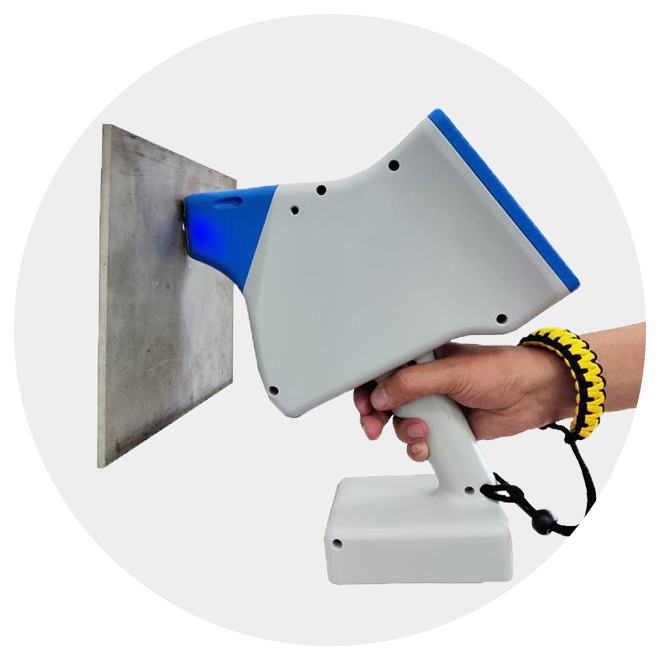
A portable LIBS spectrometer is a compact, handheld or field-deployable instrument that applies laser-induced breakdown spectroscopy outside of a traditional laboratory environment. It combines a pulsed laser source, collection optics, a spectrometer module, and onboard data processing into a single ergonomic unit — typically weighing between 1 and 3 kilograms.
The core principle hasn't changed from its benchtop counterpart. A nanosecond or picosecond laser pulse hits the target surface, ablates a microscopic amount of material, and creates a plasma plume. As the plasma cools, the excited atoms emit characteristic wavelengths of light. Those wavelengths act like fingerprints — each element has a unique spectral signature — and the built-in spectrometer captures and decodes them almost instantly.
What's changed is the engineering. Advances in compact diode-pumped solid-state lasers, miniaturized spectrometers, and low-power electronics have made it possible to shrink what once required a benchtop setup into something a field technician can carry in one hand.
How Does a Portable LIBS Spectrometer Work?
Understanding the working principle helps you get the most out of the instrument and interpret results with confidence.
Step-by-Step Process
- Laser firing — A short, high-energy laser pulse (typically from a Nd:YAG source) is focused onto the sample surface through a lens or fiber optic delivery system.
- Plasma formation — The intense energy density at the focal point vaporizes and ionizes a tiny volume of material, forming a micro-plasma at temperatures exceeding 10,000 K.
- Light emission — As the plasma expands and cools over microseconds, excited atoms and ions emit photons at element-specific wavelengths across UV, visible, and near-IR ranges.
- Spectral collection — An optical fiber or lens system captures this emitted light and routes it to the miniaturized spectrometer detector.
- Data analysis — Onboard software compares the captured spectrum against internal calibration libraries to identify elements and, in quantitative mode, calculate their concentrations.
Most modern portable LIBS units complete this entire cycle in less than two seconds per measurement. Multiple pulses are averaged to improve accuracy, and results are displayed on an integrated screen or transmitted wirelessly to a tablet or smartphone.
Key Applications of Portable LIBS Spectrometers
The portability factor unlocks a wide range of industries and use cases that simply weren't feasible with traditional benchtop instruments.
Metal Verification and Alloy Identification
This is arguably the most commercially significant application. In manufacturing, aerospace, and construction, using the wrong grade of steel, aluminum alloy, or nickel superalloy can have catastrophic consequences. A portable LIBS spectrometer allows quality control teams to verify incoming materials and finished components directly on the production line or receiving dock — no sample prep, no waiting.
Scrap metal recyclers rely on LIBS to rapidly sort mixed metal streams by composition, protecting the value of their inventory and ensuring downstream customers receive consistent material grades.
Geological Exploration and Mining
Geologists use portable LIBS units in the field to perform rapid lithological mapping and mineral identification. Rather than collecting dozens of samples and waiting weeks for assay results, exploration teams can screen outcrops and drill core directly at the site. This accelerates decision-making in prospect evaluation and reduces overall sampling costs.
Cultural Heritage and Art Authentication
Museum conservators and art authentication specialists use portable LIBS to non-destructively analyze pigments, glazes, and metal alloys in historical artifacts. Because the laser ablates only a nanogram of material, the damage is virtually invisible to the naked eye, making it acceptable for precious or irreplaceable objects.
Defense and Security
Military and security agencies deploy portable LIBS spectrometers for detecting trace residues of explosives, identifying unknown substances in the field, and verifying the composition of munitions components. The speed and minimal sample preparation make it well-suited to time-sensitive field operations.
Environmental Monitoring
Heavy metal contamination in soil and sediment is a growing concern globally. Portable LIBS units can screen soil samples for lead, arsenic, chromium, and other hazardous elements directly at remediation sites, helping environmental engineers prioritize where to focus cleanup efforts.
Advantages Over Other Portable Analytical Techniques
You might wonder how LIBS stacks up against competing portable technologies like X-ray fluorescence (XRF) or handheld optical emission spectrometry (OES). Each technique has its strengths, but LIBS offers several distinct advantages.
- No radioactive source required — Unlike XRF, LIBS uses a laser, eliminating the regulatory burden and safety concerns associated with X-ray tubes or radioisotope sources.
- Light element detection — LIBS excels at detecting lithium, beryllium, carbon, nitrogen, and other light elements that XRF struggles to measure accurately due to their low X-ray fluorescence yields. This is critical for carbon steel grade differentiation.
- Minimal or no sample preparation — Most samples can be measured as-is, without polishing, cleaning, or acid treatment.
- True surface-to-bulk analysis — By firing multiple pulses at the same spot, LIBS can depth-profile a sample, revealing how composition changes from the surface inward — useful for coatings and case-hardened parts.
- Speed — Full elemental identification in under two seconds is competitive with any field-deployable analytical method.
What to Look for When Selecting a Portable LIBS Spectrometer
Not all portable LIBS units are built the same. Here are the factors that matter most for commercial and industrial buyers.
Spectral Range and Resolution
A wider spectral range (typically 190 nm to 900 nm) ensures coverage of more elements. Higher spectral resolution improves your ability to distinguish closely spaced emission lines, which matters when analyzing complex multi-element alloys.
Laser Energy and Repetition Rate
Higher pulse energy improves signal strength on challenging samples like powders or rough surfaces. A faster repetition rate shortens the time needed to average multiple measurements, improving throughput in high-volume inspection scenarios.
Calibration Library Depth
The quality and breadth of the factory calibration library directly determines how reliably the instrument identifies alloys and grades. Look for a vendor that offers regular library updates and supports user-defined calibrations for specialized applications.
Software and Connectivity
Modern instruments should offer intuitive touchscreen interfaces, cloud connectivity, GPS tagging for field deployments, and integration with ERP or LIMS systems. Reporting capabilities matter too — PDF exports, CSV data logs, and audit trails are important in regulated industries.
Durability
Field instruments take punishment. Look for IP ratings of at least IP54 (dust and splash resistant), operating temperature ranges that match your environment, and a track record of reliability from the manufacturer.
Metalogic and the Portable LIBS Spectrometer Market
Companies operating in metals trading, recycling, and precision manufacturing are among the heaviest users of portable LIBS technology. The combination of fast throughput, light-element sensitivity, and no consumables makes LIBS particularly attractive in high-volume, cost-sensitive commercial environments.
The instrument market has matured rapidly. Several vendors now offer units with cloud-based data management platforms, enabling quality managers to review field measurements remotely, enforce acceptance thresholds centrally, and generate compliance documentation automatically.
FAQ: Portable LIBS Spectrometer
1. How accurate is a portable LIBS spectrometer compared to a laboratory instrument?
Modern portable LIBS units achieve accuracy within 0.1–0.5% for major alloying elements in well-characterized materials, which is sufficient for most industrial grade sorting and alloy verification tasks. For trace element analysis or tight compositional tolerances, laboratory confirmation remains advisable.
2. Can LIBS analyze non-metallic materials?
Yes. LIBS is element-agnostic and can analyze ceramics, minerals, polymers, soils, liquids (with appropriate accessories), and biological materials. The technique is especially valued in geology and environmental science precisely because it handles a wide variety of sample types.
3. Is the laser in a portable LIBS spectrometer dangerous?
The laser is Class 3B or Class 4, which means it can cause eye injury if proper precautions aren't followed. All commercial portable LIBS units include safety interlocks, protective housings, and require the instrument to be in contact with the sample before firing. Following the manufacturer's safety protocols makes routine operation low-risk.
4. How long does battery life last in the field?
Most current portable LIBS spectrometers provide 4–8 hours of continuous use on a single charge, depending on measurement frequency and ambient temperature. Many units support hot-swappable batteries for uninterrupted field work.
5. Does LIBS require calibration standards in the field?
For qualitative identification (alloy grade matching), factory calibrations are sufficient and require no field standards. For quantitative analysis of specific elemental concentrations, periodic verification against certified reference standards improves accuracy. Some advanced instruments include automated drift correction routines.
6. What is the cost range for a portable LIBS spectrometer?
Entry-level commercial units start around $20,000–$30,000 USD. High-performance instruments with broader spectral range, faster repetition rates, and more comprehensive calibration libraries typically range from $40,000 to $80,000. Total cost of ownership is generally lower than XRF because there are no radioactive source replacement costs or associated licensing fees.
Conclusion
The portable LIBS spectrometer has moved well beyond being a laboratory curiosity or niche research tool. It's now a practical, commercially proven instrument that delivers fast, accurate elemental analysis wherever materials need to be verified, sorted, or characterized — without the delay and cost of traditional laboratory workflows.
For industries where material identity is a safety, quality, or compliance issue, portable LIBS is increasingly the standard. Understanding how it works, what it can and can't do, and how to select the right instrument for your application puts you in a strong position to leverage this technology effectively. Whether you're managing a metals trading operation, running quality control in manufacturing, or conducting environmental field surveys, the right portable LIBS spectrometer pays for itself quickly in saved time, reduced risk, and better decisions made at the point of measurement.
